I never thought a simple search could make my hands shake.
It was late in the evening, quiet enough to hear the hum of the refrigerator in the kitchen. I sat at the dining table in my small apartment in Ohio, the soft glow of my laptop lighting up the room. The day had been long and ordinary, but a sudden memory from childhood refused to leave my mind.
A friend from middle school. Her name was Emily.
We were inseparable once. Sleepovers. Secret-sharing. School projects where we spent more time laughing than working. And then life changed. My family moved, and just like that, Emily became a chapter closed too soon.
Years passed. New friendships formed. But some people leave a mark too deep to forget.
That night, I opened a browser and stumbled upon a site called Fast People Search. It promised something that felt almost impossible: a way to find people again, for free, using publicly available information.
I hesitated. Would this even work? Would she still remember me? Would she even want to?
With a nervous breath, I typed her name.
And that search turned into a journey far bigger than I expected. Not just about discovering where Emily was, but about understanding how much technology today allows us to reconnect, verify identities, and stay safe in ways our younger selves could never imagine.
If you’ve ever wondered what information Fast People Search can reveal, or how it might help you in your own story, this guide is for you.
Let’s explore it together.
What Is Fast People Search?
Fast People Search is a free online tool that collects publicly available information about individuals across the United States. It organizes records from various sources like:
- Public data
- Online directories
- Open government records
- Social profiles
It doesn’t hack, spy, or access private databases. Instead, it gathers data already available through legal channels and puts it in one place for easy searching.
In a world where nearly every person creates a digital footprint, tools like this help people:
- Reconnect with lost friends and relatives
- Identify unknown callers
- Confirm someone’s identity before meeting or hiring them
- Learn more about a person who recently entered their life
But what exactly can you find?
Let’s break it down.
What Information Can You Find on Fast People Search?
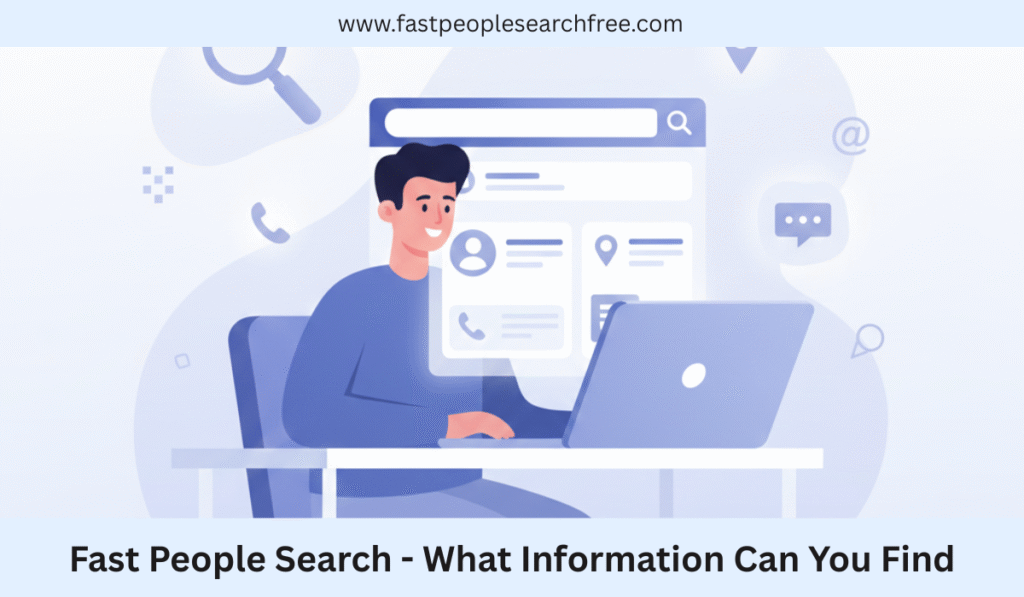
Fast People Search provides a surprising amount of publicly available details. Depending on the person’s footprint, you may find:
Full Name and Known Aliases
Sometimes people use middle names or nicknames. This helps confirm you’re looking at the right person.
Current and Previous Addresses
You can learn:
- Where they live now
- Where they have lived before
- Nearby cities or neighborhoods
This is especially useful for reconnecting with people who moved over the years.
Phone Numbers
You might find:
- Mobile numbers
- Landlines
- Numbers associated with family members
That’s what helped me reconnect with Emily. One phone number listed led to her mom. One conversation led to an emotional reunion years in the making.
Age and Birth Year
This helps differentiate between people who share the same name.
Possible Relatives and Household Members
These connections can confirm identities or help contact someone indirectly.
Email Addresses
Even one email can help locate someone on social networks, job sites, or professional platforms.
Social Media Profiles
You may discover:
- Other public accounts
A single tagged photo can unlock a whole lost era of memories.
Public Records Snapshot
Sometimes you’ll see hints of:
- Marriage records
- Property records
- Court records
These are publicly accessible documents in the United States depending on the state’s transparency laws.
Not all data appears for everyone. Some people keep a low digital profile, while others leave thousands of breadcrumbs behind.
Why Do People Use Fast People Search?
People search tools aren’t just for nostalgia. They serve real-life benefits, including:
Finding Long-Lost Connections
Friends. Classmates. Family. Military buddies. Life separates us, and this brings us closer again.
Verifying Someone’s Identity
Before:
- Hiring a nanny
- Renting your house
- Meeting someone from online dating
Basic information can prevent dangerous decisions.
Identifying Unknown Callers
Fake scams and spam calls are widespread in the U.S. Looking up numbers helps you stay safe.
Locating Property Details
Sometimes address searches lead to ownership records. Useful for buyers, sellers, or legal situations.
Settling Curiosity
Sometimes the heart simply wants to know:
Where are they now? Are they okay? Does their life look happy?
Curiosity isn’t always intrusive. Sometimes it’s care in disguise.
Is the Information Accurate?
Mostly. But not always.
Public records change and databases update at different speeds. That means:
- Old addresses may still show up
- Phone numbers might belong to someone else now
- Some info can be outdated
Cross-checking details is always wise.
Fast People Search is a starting point, not the final destination.
Is Fast People Search Legal?
Yes. Completely legal in the United States.
The information shown is already accessible through public records and data directories. The site does not display:
- Bank details
- Private messages
- Passwords
- Sensitive identity documents
Still, searching responsibly is important. Using information to harass, stalk, or violate privacy laws is not allowed.
Personal Story: What Happened With Emily?
After I gathered enough courage, I reached out.
Her mother answered the phone. Her voice was warm and familiar. She remembered me. She gave me Emily’s new number.
I stared at it for several minutes, wondering if I should call or text.
Finally, I sent a simple message:
This may sound strange, but I think we were friends a long time ago. I hope life has been kind to you.
My heart thumped as I waited. Seconds felt like forever. Then my phone buzzed.
Is this really you? I can’t believe it. I’ve missed you.
We talked for almost an hour that night. About childhood. Careers. Families. Dreams lost and dreams blooming.
We didn’t pretend the years hadn’t changed us. They had. But connection doesn’t need to be the same to still be real.
Technology didn’t just help me find someone. It helped me rediscover a part of myself I didn’t know was missing.
Tips for Using Fast People Search Safely and Smartly
- Double-check names and cities to avoid mistakes
- Verify with multiple sources
- Respect personal boundaries
- Keep intentions kind and ethical
- Never use the information for harm
The internet gives power. We must use it responsibly.
What If You Can’t Find the Person?
Don’t give up yet.
Try searching with:
- Middle names
- Nicknames
- Previous cities or states
- Relatives’ names
- Social media clues
Some people intentionally keep a minimal online footprint. And that’s okay. Closure doesn’t require contact. Sometimes knowing you tried is enough.
Final Thoughts: Reconnecting Is a Brave Act
Searching for someone is more than looking up a name.
It’s reopening a chapter.
It’s admitting you care.
It’s believing some stories deserve a chance to continue.
Sometimes you’ll find the person.
Sometimes you’ll find peace instead.
Either way, searching shows growth. It takes courage to reach toward your past and hope for something good.
And if a tool like Fast People Search can be the bridge between yesterday and today, maybe that’s a sign that even in such a fast-paced world, connection still matters most.
FAQs About Fast People Search
Is the information on Fast People Search always free?
Yes, basic results are free. Some deeper data may require third-party services.
Does Fast People Search show criminal records?
It may show hints of possible court or legal records, but full reports are usually separate and paid.
Can someone remove their information from the site?
Yes, Fast People Search offers opt-out options to protect privacy.
Is this service available outside the United States?
No, the data focuses on U.S. residents only.
Can it find someone with just a first name?
Not usually. You need at least a last name or location for accurate results.