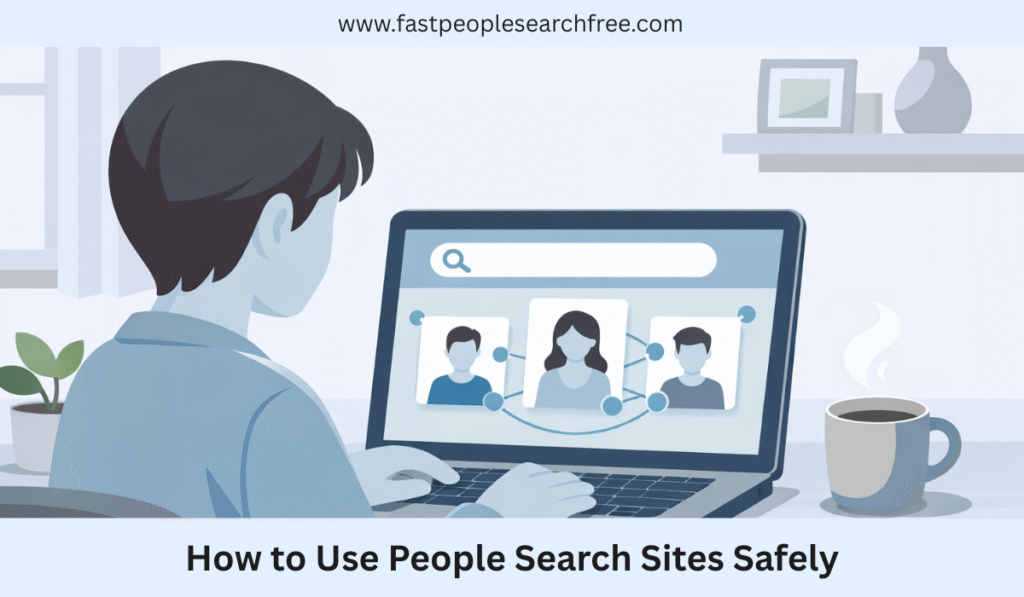
The first time I used a people search site, it wasn’t for anything dramatic.
It was late at night. The house was quiet. The kind of quiet where your thoughts feel louder than usual. I had been thinking about someone I hadn’t spoken to in years, and curiosity nudged me toward my laptop. I typed a name into a search box, not really knowing what to expect.
What came back surprised me.
Addresses I didn’t recognize. Old phone numbers. Names of people I assumed were relatives. Some of it felt accurate. Some of it felt unsettling. And for a brief moment, I wondered how much of my own life was sitting in similar databases, waiting for a stranger to type my name.
That was the moment I realized something important.
People search sites can be useful. But they can also be misunderstood, misused, and even harmful if you don’t know how to approach them carefully.
This guide is about how to use people search sites safely, not fearfully. It’s about understanding what these sites really are, what they can and cannot tell you, and how to protect both yourself and others while using them.
What People Search Sites Really Are
People search sites are databases that collect publicly available information and organize it into searchable profiles. The data usually comes from sources like public records, online directories, property filings, court documents, and sometimes social platforms.
What matters is this:
They do not “spy” on people.
They do not access private accounts.
They aggregate information that already exists in public or semi-public spaces.
However, the way this information is presented can make it feel more complete or more current than it actually is. That’s where misunderstanding begins.
People search sites are tools. And like any tool, they depend entirely on how you use them.
Why People Use People Search Websites
People don’t use these sites for one single reason. Most of the time, the motivations are very human.
Some people want to reconnect with someone they lost touch with. Some want to confirm who’s calling them repeatedly from an unknown number. Some want to learn more about a person they met online. Others are simply curious about their own digital footprint.
These reasons are understandable. The danger doesn’t come from curiosity. It comes from assuming that what you see is complete, accurate, or meant to be used without context.
Safe use starts with realistic expectations.
The Biggest Misunderstanding About People Search Sites
One of the most common mistakes is believing that people search sites show the full truth about a person.
They don’t.
They show fragments. Snapshots. Outdated trails. Sometimes those fragments line up well. Other times, they don’t.
An address might be from ten years ago.
A phone number might belong to someone else now.
A listed relative might simply share a name.
If you approach these sites expecting certainty, you’re setting yourself up for confusion. If you approach them expecting clues, you’re on safer ground.
Understanding the Risks Before You Search
Using people search sites without awareness can create real problems.
One risk is misidentification. Common names often pull up multiple profiles, and it’s easy to assume the wrong one is correct. Another risk is emotional misinterpretation, where outdated or incorrect information leads to unnecessary worry or confrontation.
There’s also a privacy risk. Not because the site is attacking you, but because people often forget to think about their own data while searching for others.
Safe use begins by acknowledging these risks instead of ignoring them.
How to Verify Information Responsibly
Verification is the most important safety habit you can build.
Never trust a single result. Instead, look for consistency across multiple sources. If an address appears on one site but not anywhere else, treat it as unconfirmed. If a detail aligns with known facts from your own experience, it becomes more credible.
Verification means slowing down. It means resisting the urge to jump to conclusions. It means allowing uncertainty to exist while you gather more context.
People search sites should start conversations in your mind, not end them.
Why Outdated Data Is So Common
People move. Change jobs. Change phone numbers. Change names. Databases update slowly, and not all sources refresh at the same pace.
This means that even reputable people search sites often contain outdated information. That doesn’t make them useless. It just means they must be used with caution.
If you keep this in mind, you’re less likely to react emotionally to what you see.
Protecting Your Own Privacy While Searching
One of the safest habits you can develop is remembering that what applies to others also applies to you.
If you’re curious how your own information appears online, search yourself. See what comes up. Notice what’s accurate and what isn’t. This exercise builds empathy and awareness.
It also helps you understand why restraint matters. Just because information is available doesn’t mean it should be shared, discussed casually, or acted on without care.
Your privacy and someone else’s privacy are not separate issues. They’re connected.
Information You Should Never Trust Blindly
There are certain types of data that deserve extra caution.
Criminal history summaries, for example, are often incomplete or misrepresented. Court records can be misread without context. Financial assumptions drawn from addresses or property records can be misleading.
People search sites are not investigative reports. They are starting points. Treating them as final authority is unsafe.
Ethical Boundaries When Searching for People
This is where safety becomes responsibility.
Using people search sites to understand a situation is one thing. Using them to harass, shame, threaten, or pressure someone crosses a line.
Ethical use means asking yourself why you’re searching and what you plan to do with the information. If the answer involves control, confrontation, or exposure, it’s time to pause.
Respect is a form of safety, both for you and for others.
Red Flags That Signal Unsafe or Misleading Sites
Not all people search sites operate with the same standards.
Be cautious of sites that:
- Promise “secret” or “guaranteed” results
- Use fear-based language to push upgrades
- Hide opt-out options
- Display alarming claims without evidence
- Demand excessive personal information upfront
A safe site is transparent about limitations and clear about how data is sourced.
How Scammers Misuse People Search Tools
Scammers often use people search sites as a research tool, not as a service to sell.
They may look up relatives, addresses, or past locations to make scams sound more believable. This is why protecting your own data matters and why awareness is so important.
Understanding how these tools can be misused helps you recognize manipulation when it appears.
How to Opt Out of People Search Databases Safely
Most reputable people search sites offer opt-out options, though they are not always easy to find.
Opting out usually requires verifying your identity and requesting removal. This process takes time, patience, and follow-through.
While opting out won’t erase all public records, it reduces casual exposure and adds a layer of protection. Doing this once gives you insight into how these systems work, which makes you a more informed user.
Emotional Responsibility While Searching
Searching for information about people often stirs emotions you didn’t expect.
You may feel relief. Anxiety. Sadness. Curiosity. Sometimes all at once.
Safe use means acknowledging those emotions without letting them dictate your actions. Take breaks. Step back. Give yourself space to process what you find.
The internet moves fast. Human emotions don’t.
When Using People Search Sites Is Appropriate
There are situations where using people search sites makes sense.
Confirming identity.
Understanding a confusing situation.
Reconnecting thoughtfully.
Protecting yourself from scams.
In these cases, the key is moderation and verification.
When Using People Search Sites Is Not Appropriate
It becomes inappropriate when:
- Someone has clearly asked for privacy
- The search becomes obsessive
- The information is used to intimidate
- Assumptions replace communication
Knowing when to stop is just as important as knowing how to search.
Learning Digital Maturity Through Awareness
The longer you use people search tools responsibly, the more your perspective changes.
You stop seeing profiles as truths and start seeing them as fragments. You become slower to judge. Quicker to verify. More respectful of uncertainty.
That’s digital maturity. And it’s one of the most important skills in a connected world.
Final Thoughts: Awareness Is the Real Protection
Using people search sites safely isn’t about fear. It’s about understanding.
Understanding that information without context can mislead.
Understanding that curiosity carries responsibility.
Understanding that restraint is a form of respect.
When you approach these tools calmly, thoughtfully, and ethically, they become what they were meant to be: resources, not weapons.
And in learning to use them wisely, you don’t just protect yourself.
You grow.
You become more patient.
More discerning.
More resilient.
In a world overflowing with information, that kind of growth matters more than ever.
FAQs
Are people search sites legal to use?
Yes. They operate using publicly available information. Legal use depends on ethical behavior, not just access.
Can people search sites be dangerous?
They can be if used irresponsibly or trusted blindly. Awareness reduces risk.
How accurate is the information on people search sites?
Accuracy varies. Some data may be correct, some outdated, and some incomplete.
How do I protect my own data on these sites?
Search yourself, understand what’s visible, and opt out where possible.
Can someone see if I searched them?
No. Searches are anonymous.
Should I trust free people search websites?
Free sites can be useful, but they should always be used with caution and verification.