It usually starts with a small moment of curiosity.
Maybe someone new entered your life.
Maybe an old name resurfaced.
Maybe something didn’t quite add up.
You don’t want to invade privacy. You don’t want to assume the worst. You just want to understand who you’re dealing with in a world where so much of life happens online.
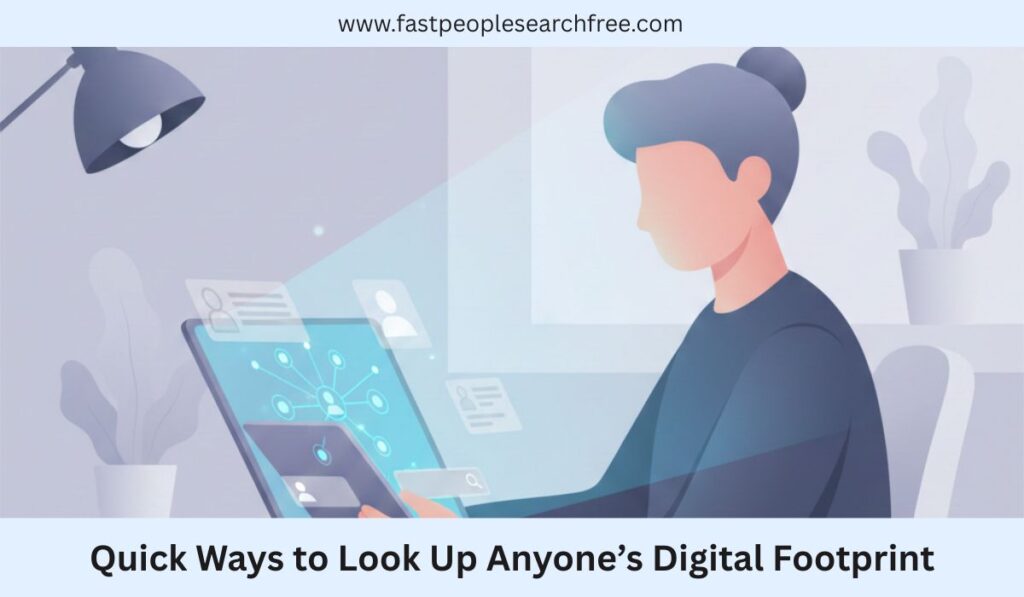
That’s where a digital footprint comes in.
A digital footprint is simply the trail of information a person leaves behind while using the internet. Sometimes it’s intentional. Sometimes it’s not. But together, those traces tell a story.
This guide walks you through quick, practical ways to look up anyone’s digital footprint, using tools and techniques that are accessible, responsible, and realistic. No shortcuts. No overpromises. Just clear steps that help you see the bigger picture.
What a Digital Footprint Really Means
A digital footprint includes any publicly available information connected to a person online.
This can include:
- Social media activity
- Mentions on websites or forums
- Images and videos
- Comments and reviews
- Public records
- Business listings
- Old profiles that still exist
Some footprints are loud and obvious. Others are quiet and scattered.
The goal isn’t to judge or spy.
The goal is to understand patterns.
Start With a Focused Search Engine Check
The fastest way to begin is also the most overlooked.
Search engines are powerful when used intentionally.
Instead of typing just a name, combine it with context:
- Full name in quotation marks
- Name plus city
- Name plus job or interest
- Name plus username
Scroll beyond the first page. Many meaningful traces live deeper in the results.
This step often reveals:
- Social profiles
- News mentions
- Blog comments
- Business pages
- Event participation
Think of this as building the outline of a story.
Check Social Media Platforms Individually
Each platform highlights a different side of someone’s digital presence.
Search the same name separately on:
- Facebook for personal connections
- Instagram for lifestyle and visuals
- LinkedIn for professional history
- X or Reddit for opinions and discussions
Don’t just look at profiles. Look at:
- Post history
- Comment behavior
- Tags and mentions
- Account age and consistency
Digital footprints are less about single posts and more about long-term behavior.
Search Usernames Across the Web
Many people reuse usernames without realizing it.
If you know a username, search it directly.
You may find:
- Old forum accounts
- Gaming profiles
- Comment sections
- Archived social media
This often reveals interests, habits, and timelines that aren’t obvious elsewhere.
Usernames can be more revealing than real names.
Use Reverse Image Search
Images travel far.
If you have a photo:
- Upload it to a reverse image search tool
- Look for where else it appears online
This can help:
- Verify authenticity
- Identify reused or stock images
- Find old profiles or mentions
Images are one of the fastest ways to uncover hidden digital trails.
Look at Public Records and Listings
Some parts of a digital footprint exist outside social media.
Public listings may include:
- Business registrations
- Professional licenses
- Property records
- Court records (where publicly accessible)
These records help confirm real-world activity that aligns with online claims.
They add credibility or reveal inconsistencies.
Check Reviews, Comments, and Contributions
People often forget about what they’ve written online.
Search for:
- Reviews on marketplaces
- Comments on blogs or forums
- Contributions to community sites
Writing style, tone, and frequency tell you a lot about someone’s personality and values.
This is one of the most human parts of a digital footprint.
Explore Archived and Cached Pages
Not everything disappears when profiles are deleted.
Search engines and web archives sometimes store:
- Old versions of profiles
- Removed content
- Cached pages
These snapshots can reveal:
- Past interests
- Old affiliations
- Changes over time
A digital footprint is as much about history as it is about the present.
Use People Search Tools Carefully
People search websites aggregate public information into one place.
They may show:
- Address history
- Possible phone numbers
- Known associates
- Age range
These tools are best used to confirm, not assume.
Always cross-check. Data can be outdated.
Pay Attention to Patterns, Not Isolated Facts
This is where many people go wrong.
One odd post doesn’t define someone.
One missing detail doesn’t mean deception.
Look for:
- Consistency across platforms
- Repeating themes
- Timeline alignment
Patterns reveal truth better than isolated facts.
Understand What a Digital Footprint Cannot Tell You
Even a detailed footprint has limits.
It cannot fully explain:
- Intentions
- Growth or change
- Context behind actions
- Offline behavior
Digital footprints show fragments. Not the whole person.
Use them as insight, not judgment.
Also Read: How to Find Someone When You Only Remember Their First Name
Ethical Boundaries Matter
Just because information is available doesn’t mean it should be misused.
Avoid:
- Harassment
- Stalking behavior
- Sharing private details
- Making assumptions without context
Responsible searching respects both curiosity and boundaries.
When Looking Someone Up Changes How You See Things
Many people expect clarity when they search.
What they often get is perspective.
You may realize:
- People are more complex than they appear
- Online presence rarely tells the full story
- Time changes how people express themselves
Sometimes the search isn’t about finding answers.
It’s about learning to ask better questions.
Final Thoughts: Awareness Is a Form of Growth
Looking up someone’s digital footprint isn’t about control or suspicion.
It’s about awareness.
In a connected world, awareness helps us move with clarity instead of fear. It teaches us patience instead of assumptions. And it reminds us that behind every screen is a human being shaped by time, experience, and change.
Sometimes you learn something new about someone else.
Sometimes you learn something about yourself.
Either way, choosing to understand before reacting is a sign of resilience.
And in today’s digital world, resilience matters more than ever.
FAQs
Is it legal to look up someone’s digital footprint?
Yes, as long as you use publicly available information responsibly.
How long does it take to build a digital footprint overview?
Anywhere from minutes to hours, depending on how active the person is online.
Can someone hide their digital footprint completely?
Very few people can. Even minimal activity leaves traces.
Should I tell someone I looked them up?
That depends on context and relationship. Use judgment.
What if I find something uncomfortable?
Pause. Reflect. Avoid jumping to conclusions.